Data Governance is regarded as a comprehensive framework of standards and policies for organization-wide data management processes, ensuring that data is properly governed as a critical strategic asset. So how can organizations implement Data Governance effectively?
What is Data Governance?
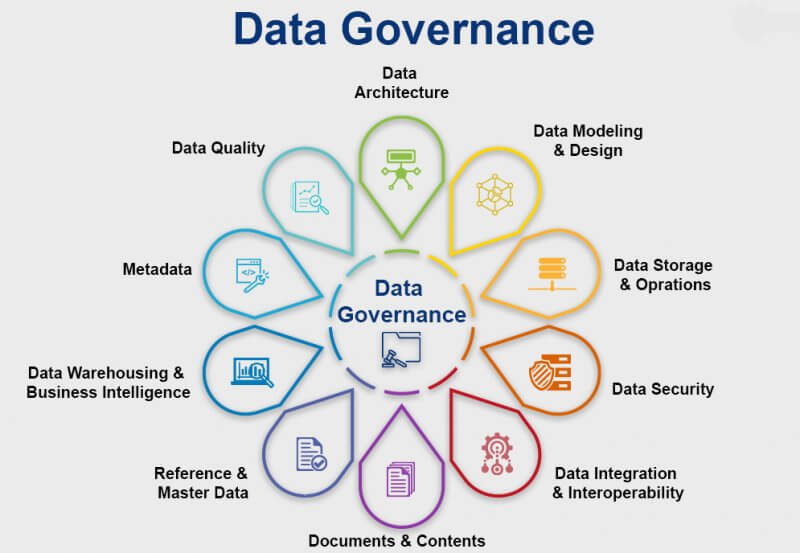
Data Governance is a system of processes, policies, rules, and standards designed to manage data across the entire organization, ensuring that data is accurate, secure, accessible, and compliant with regulations. The ultimate objective of Data Governance is to transform data into a usable and trustworthy asset that supports analytics, decision-making, and regulatory compliance.
Why is Data Governance important?
In an era of exponential data growth, organizations without a clear data governance strategy struggle to maintain data integrity and fully leverage their data assets. An effective Data Governance program helps to:
- Manage data as a strategic asset, ensuring that all data is clean, standardized, and consistent.
- Ensure compliance with legal and regulatory requirements related to data protection and privacy, especially in environments governed by multiple data standards such as the General Data Protection Regulation (GDPR), among others.
- Establish a solid foundation for artificial intelligence (AI), big data analytics, and digital transformation initiatives.
How to implement Data Governance effectively
1. Define objectives and roles
Clearly identify strategic objectives such as improving data quality, ensuring regulatory compliance, or enabling advanced analytics. At the same time, clearly define roles and responsibilities such as Data Owner, Data Steward, and Data Governance Council to ensure consistent and coordinated implementation across the organization.
2. Establish data policies and standards
Develop standardized rules for data management, including data processing procedures, metadata management, as well as data access and control policies.
3. Apply technological tools
Leverage data governance tools such as data catalog management systems, data lineage tracking, and access control mechanisms. These tools help automate governance processes and maintain data quality as systems scale.
4. Audit and monitor compliance
Set up periodic audit processes to assess compliance, identify issues early, and adjust strategies and policies accordingly.
Benefits of Data Governance
Implementing Data Governance delivers significant value to organizations:
- Improved data quality: Standardized and controlled data reduces errors and increases reliability across all analytical activities.
- Enhanced decision-making efficiency: With high-quality and consistent data, leaders can make faster and more accurate decisions.
- Regulatory compliance and security: Organizations are better equipped to meet legal and industry requirements, minimizing legal risks and financial penalties.
- Cost optimization and competitive advantage: Reducing data duplication lowers operational and management costs while strengthening innovation capabilities and competitive positioning.
Common challenges
Despite its benefits, implementing Data Governance presents several challenges:
- Resistance from employees: Data governance may be perceived as a constraint rather than an enabler, especially when awareness and collaboration are limited.
- Fragmented data and silos: Data scattered across departments and systems makes it difficult to standardize policies and governance practices.
- Lack of resources and expertise: Many organizations lack skilled personnel and appropriate technologies to implement complex governance frameworks.
- Balancing security and accessibility: Managing access rights in a way that ensures data security while enabling flexible data usage is a non-trivial challenge.
Data Governance is not merely a technological initiative but a comprehensive data management strategy that enables organizations to protect and exploit data effectively, securely, and in compliance with regulations. When implemented correctly, it delivers substantial business value and establishes a robust foundation for sustainable digital transformation.