Today, Data Warehouse and Data Lake are two of the most widely adopted data architectures. With these two storage approaches, enterprises must decide whether to prioritize data standardization or comprehensive data retention.
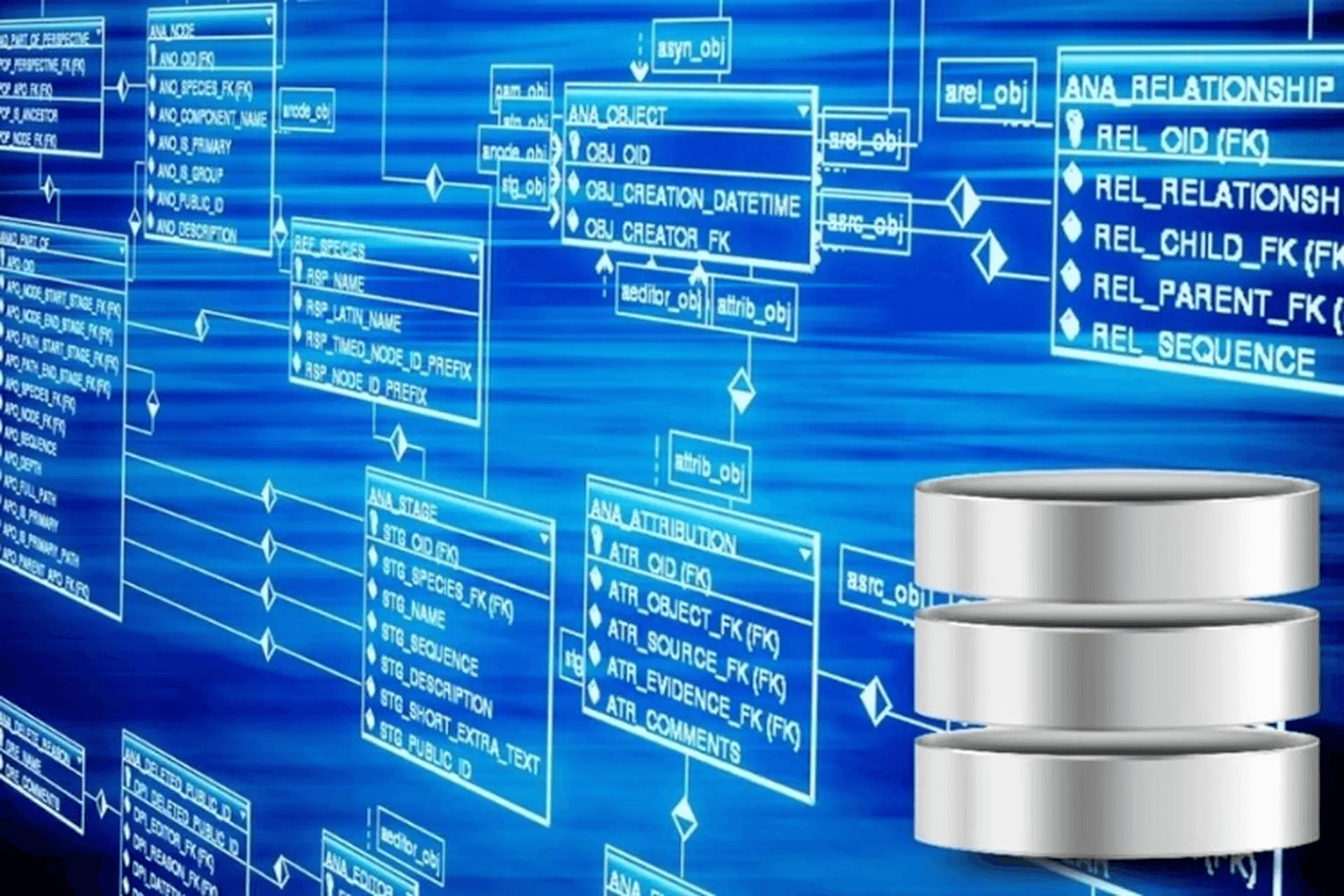
Data Warehouse – A standardized data model for immediate analytics
A Data Warehouse is built with a clear objective: to support business reporting and analytics. Before data is ingested into the system, it is cleansed, standardized, and organized according to predefined models – typically aligned with KPIs, financial reports, sales metrics, or operational performance indicators.
The operating mechanism of a Data Warehouse revolves around selecting only the necessary data from source systems. From there, the data structure and definitions are standardized upfront, and raw data is stored only after processing. This approach enables enterprises to quickly obtain consistent, easily queryable, and reliable data to support decision-making.
Data Lake – A comprehensive data storage model for flexible future exploration
In contrast, Data Lake is built on the philosophy of store first, analyze later. Rather than retaining only processed data, a Data Lake ingests nearly all generated data – from transactional data and system logs to files, images, semi-structured, and unstructured data.
The operational model of a Data Lake focuses on storing data in its raw and native state, without imposing a predefined structure at the time of ingestion. This allows multiple exploration and analysis approaches depending on use cases, creating a flexible environment for advanced analytics, data science, and future AI initiatives.
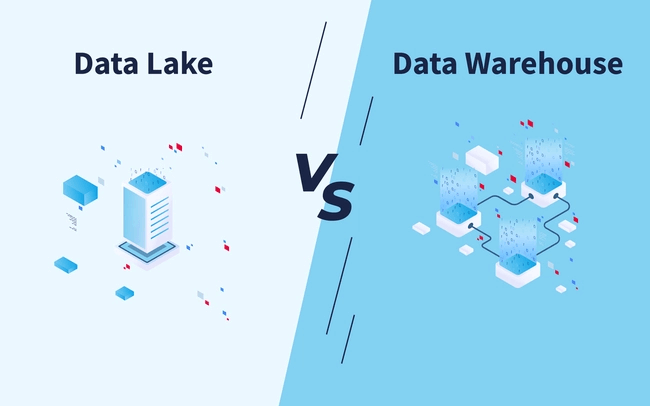
How do Data Warehouse and Data Lake differ?
1. Purpose of use
Data Warehouse is designed for predefined analytical needs, serving reporting, performance monitoring, and operational control. Meanwhile, Data Lake is more suitable for exploratory scenarios where business questions are not fully defined, and organizations need to discover data, experiment with models, and uncover new insights.
2. Data organization approach
Data Warehouse requires tightly structured, consistent data models designed from the outset. While this ensures data consistency, it also limits flexibility when new requirements emerge. Data Lake, on the other hand, accepts data in multiple formats, allowing enterprises to store all data without immediate standardization. However, without a clear governance strategy, data can easily become difficult to control and exploit.
3. Target users
Data Warehouse primarily serves non-technical users such as executives, business teams, finance, operations, and those with recurring reporting needs.
Data Lake, by contrast, is better suited for data-centric users such as data analysts, data scientists, and teams working on advanced analytics and AI use cases.
Overall comparison between Data Warehouse and Data Lake
| Criteria | Data Warehouse | Data Lake |
| Purpose | Analytics and reporting | Data storage and exploration |
| Data State | Processed and standardized from raw data | Raw data |
| Data Types | Primarily structured data (names, dates, phone numbers, addresses, etc.) | Supports all three types: structured, semi-structured and unstructured |
| Scalability | Limitied scalability | Highly scalable |
| Flexibility | Low | High |
In practice, no single model is universally superior. Data Warehouse and Data Lake only deliver real value when aligned with an organization’s business objectives and data maturity.
- If an enterprise requires fast, stable data for operations and reporting, Data Warehouse is the appropriate choice.
- If an enterprise aims to extract deeper insights and prepare for AI and advanced analytics, Data Lake is an essential foundation.
Challenges arise when organizations must operate multiple systems in parallel-leading to fragmented data, synchronization difficulties, and limited scalability over time.
When enterprises need a unified Data Platform
Rather than choosing one model over the other, many enterprises today are moving toward unified data platforms that enable flexible data storage while supporting advanced analytics, centralized governance, and reduced operational complexity.
FPT Data Platform on FPT Data Suite is developed with this vision, enabling enterprises to:
- Consolidate data from multiple sources into a single platform
- Flexibly leverage data for reporting, analytics, and AI
- Reduce infrastructure management overhead and remain future-ready for scalability
Experience FPT Data Suite to start building a data platform tailored to your enterprise needs: https://www.datasuite.vn/